
Quick Answer
A practical technical guide for cannabis vape brands comparing ceramic core cartridge requirements before sample approval and production planning.
Ceramic core vape cartridge selection should start with the oil, not with a generic cartridge specification. Cannabis brands need to evaluate how oil viscosity, inlet geometry, ceramic pore behavior, heating profile, airflow, and storage conditions work together before approving samples.
A good ceramic core choice is not simply hotter or more porous. It is the cartridge architecture that keeps the ceramic supplied with oil, spreads heat in a controlled way, and stays stable through filling, capping, shipping, storage, and repeated customer use.
Decision Summary
For cannabis vape brands, ceramic core selection is a production-risk decision. The core sits at the point where oil movement, heat generation, vapor path, and battery behavior meet. If that small component is mismatched, the symptoms usually show up as leakage, clogging, dry heating, inconsistent draw response, darkening oil, or sample results that do not repeat across units.
The right ceramic core depends on the exact oil and the intended cartridge system. Distillate, live resin, live rosin, liquid diamonds, and blended formulations can behave differently in the same hardware. A brand team should therefore evaluate ceramic core design alongside the tank, inlet holes, resistance, voltage recommendation, mouthpiece path, filling method, and target battery guidance.
This article is written for brand owners, procurement teams, product managers, and operators who need a practical way to review ceramic cartridge samples before production. It supports the engineering context on the CLEARVAPE ceramic heating page without turning that page into duplicate article content.
Ceramic Core Selection Table
| Evaluation Area | What To Review | Why It Matters For Cannabis Oil Hardware | | --- | --- | --- | | Oil profile | Viscosity range, terpene content, formulation stability, fill volume | Oil behavior determines how quickly the core must replenish during repeated draws. | | Ceramic structure | Porosity, pore connectivity, surface behavior, oil retention | The core must hold oil near the heating zone without flooding the airway. | | Inlet design | Hole size, hole count, position, reservoir contact | Inlets control how oil enters the core area during storage and use. | | Heat profile | Resistance, target voltage, heating surface, power density | Heat must match oil replenishment so the core is not starved or overheated. | | Airflow path | Center post, condensation path, draw resistance | Airflow affects vapor movement, clogging tendency, and user draw feel. | | Production handling | Filling, capping, storage orientation, transit conditions | A sample that works on a bench still needs to survive real production handling. |
Technical Ceramic Heating Explanation
A ceramic core is often described as a heating material, but that language is too narrow for real cartridge development. In a cannabis vape cartridge, the ceramic is part of a fluid and thermal system. It helps manage how oil approaches the heating area, how heat spreads through the contact zone, and how vapor exits through the airway.
Porous ceramic can retain oil inside a connected pore structure. That helps keep oil near the heating zone during a draw. If the pore network is too restrictive for the oil, replenishment can lag behind heating demand. If the structure moves oil too aggressively, the cartridge may become more sensitive to flooding, leakage, or unstable draw behavior.
The heating element also matters. A ceramic body can only perform well if resistance, voltage recommendation, heating area, and power density are matched to the oil path. A cartridge that looks correct on paper may still behave differently when the oil sits for several days, when the tank is partially used, or when the battery output differs from the sample test setup.
For that reason, ceramic core evaluation should not be isolated from the rest of the cartridge. The review needs to include the ceramic body, metal center post, seal structure, reservoir geometry, mouthpiece path, oil inlet location, filling process, and battery recommendation.
Oil Behavior And Viscosity Context
Cannabis oils do not move through cartridge hardware in the same way. A relatively predictable distillate may tolerate a wider hardware window. Live resin can introduce more variation through terpene profile and formulation behavior. Live rosin and other high-viscosity oils can require closer attention to low-temperature oil movement, ceramic saturation, and clogging after rest periods.
The same oil can also change behavior under different storage and use conditions. Temperature, orientation, fill level, and time after capping can influence how quickly oil reaches the ceramic core. That is why a short bench test is useful but incomplete. Brands should review the filled cartridge over time, not only immediately after filling.
This does not mean every thick oil needs the largest possible inlet or the highest possible operating power. Overcorrecting one variable can create a new issue somewhere else in the system. The better question is whether the oil, inlet, ceramic structure, heat profile, and airflow path remain balanced during realistic use.
Technical Evaluation Framework
1. Start With The Oil Specification
Before reviewing cartridge options, document the oil type, viscosity behavior, terpene content range, fill volume, and expected storage conditions. If the oil varies by batch, include that range in the hardware conversation. The sample should be judged against the actual oil program, not a generic reference liquid.
2. Match Inlet Geometry To Replenishment Need
Inlet holes need to let oil reach the ceramic core at the right pace. Too little feed can create dry heating or uneven vapor output. Too much feed can increase leakage or flooding risk. The correct inlet design depends on viscosity, tank geometry, storage orientation, and how the cartridge will be filled and capped.
3. Review Ceramic Saturation Behavior
A ceramic core should hold enough oil near the heating area to support repeated draws. During sample review, the team should watch for delayed recovery after rest periods, weak initial draws, harsh late draws, or visible oil starvation around the core. These observations are often more useful than a single specification sheet.
4. Confirm Electrical Matching
Voltage is not an independent decision. The same voltage can create different power behavior across different resistance values. A ceramic core built around one resistance range may not behave the same if the battery, coil structure, or power-control logic changes. Cartridge samples should be tested with the intended battery recommendation or a controlled equivalent.
5. Check Airflow And Condensation Path
Airflow influences draw feel, vapor movement, and clogging risk. A ceramic core can be well matched to the oil but still disappoint if condensation collects in a narrow path or if the center post does not support the intended draw profile. Airflow review should include fresh units, rested units, and partially used units.
6. Validate With Production Handling In Mind
A cartridge must work after filling, capping, labeling, packing, transit, and shelf storage. The hardware approval process should include storage orientation, temperature shift checks, cap torque or press-fit review, leakage inspection, and sample consistency across more than one unit.
Production Validation Checklist
- Confirm oil viscosity behavior before sample selection. - Test the actual oil, not only a substitute reference liquid. - Record the cartridge capacity, inlet geometry, ceramic core style, resistance, and recommended battery range. - Check filling speed and capping behavior with the intended process. - Inspect leakage after upright, inverted, and side storage where relevant. - Review clogging after overnight and multi-day rest periods. - Compare first draw, mid-use draw, and late-use draw response. - Check whether the oil darkens or leaves unusual residue around the heating zone. - Test the cartridge with the intended battery or approved battery guidance. - Compare multiple units from the same sample batch before approval. - Keep notes on any change made between sample rounds.
Common Failure Modes To Evaluate
Slow Oil Replenishment
Slow replenishment can appear as weak vapor, dry heating, inconsistent draw response, or a sample that starts well but declines after repeated use. The root cause may be inlet size, ceramic pore behavior, oil viscosity, heating demand, or a combination of those factors.
Flooding Or Leakage
Flooding is not always caused by one seal. If oil moves into the heating chamber faster than the system can manage it, the cartridge may leak or feel unstable. Teams should review oil path, inlet position, storage behavior, and assembly tolerance before blaming a single component.
Clogging After Rest
Clogging can be influenced by condensation, oil viscosity, airway geometry, heating pattern, and user draw behavior. A sample that performs well during continuous bench use may still clog after resting overnight. That makes rest-period testing important before production approval.
Heat Mismatch
Heat mismatch can happen when the ceramic core, resistance, voltage guidance, and oil feed rate are not aligned. The symptom may be harshness, darkened oil, residue, or inconsistent vapor. The review should focus on balance rather than simply increasing or lowering voltage.
Internal Link Path
- /engineering/ceramic-heating - /platform/510-vape-cartridges - /products-overview - /sample-request - /knowledge/articles/510-vape-cartridge-hardware-selection-guide - /knowledge/articles/live-rosin-vape-hardware-guide
How This Fits CLEARVAPE Hardware Selection
This article should sit between the ceramic engineering page and the 510 cartridge platform page. The engineering page explains the system logic behind porous ceramic, heating integration, oil behavior, and device architecture. The 510 cartridge page helps buyers compare cartridge formats and production-ready platform choices.
For a buyer, the natural next step is sample review. The conversation should cover oil type, target fill volume, preferred cartridge format, battery recommendation, airflow expectation, and validation schedule. That keeps the article useful for search while still moving qualified buyers toward a real technical review.
FAQ
What should cannabis brands evaluate in a ceramic core vape cartridge?
Brands should evaluate oil compatibility, inlet geometry, ceramic saturation, resistance, voltage recommendation, airflow path, leakage behavior, clogging after rest, and consistency across multiple filled samples. The cartridge should be tested with the actual oil and intended battery guidance.
Is a more porous ceramic core always better?
No. More porosity does not automatically mean better cartridge behavior. The ceramic structure has to balance oil transport, oil retention, thermal response, leakage control, and mechanical stability. The right design depends on the oil and cartridge architecture.
Why does ceramic heating behave differently with live resin or live rosin?
Live resin and live rosin programs can vary in terpene content, viscosity, and sensitivity to heat profile. Those variables affect how quickly oil reaches the heating zone and how the cartridge behaves after rest periods. Sample testing should confirm the actual oil fit before production.
Should ceramic core selection be separate from battery selection?
No. Resistance, voltage, power output, and battery behavior influence how the ceramic core heats. A cartridge should be reviewed with the intended battery recommendation or a controlled test setup that reflects the final product guidance.
Schema Notes
Use Article schema for the final article page. FAQPage schema may be used only if the published page renders visible FAQ markup that matches the schema text. The comparison table supports answer extraction, but it should not be marked as Product, Review, rating, price, or aggregate performance schema.
Do not add fake search metrics, ratings, price data, laboratory values, or performance measurements. Any future GSC metrics should come from approved Google Search Console data or remain unavailable.
CTA
Request a ceramic cartridge sample review with your oil type, fill volume, viscosity behavior, battery expectation, and launch requirements.
Compliance Notes
- Keep this article in B2B cannabis vape hardware evaluation language. - Do not add medical outcomes, consumption-effect language, home extraction guidance, consumer retail prompts, or unsupported performance guarantees. - Do not invent search volume, CPC, impressions, clicks, CTR, average position, or conversion metrics. - Keep the draft unpublished until a human approves CMS scheduling or publishing.
Media ALT/Caption/Classification
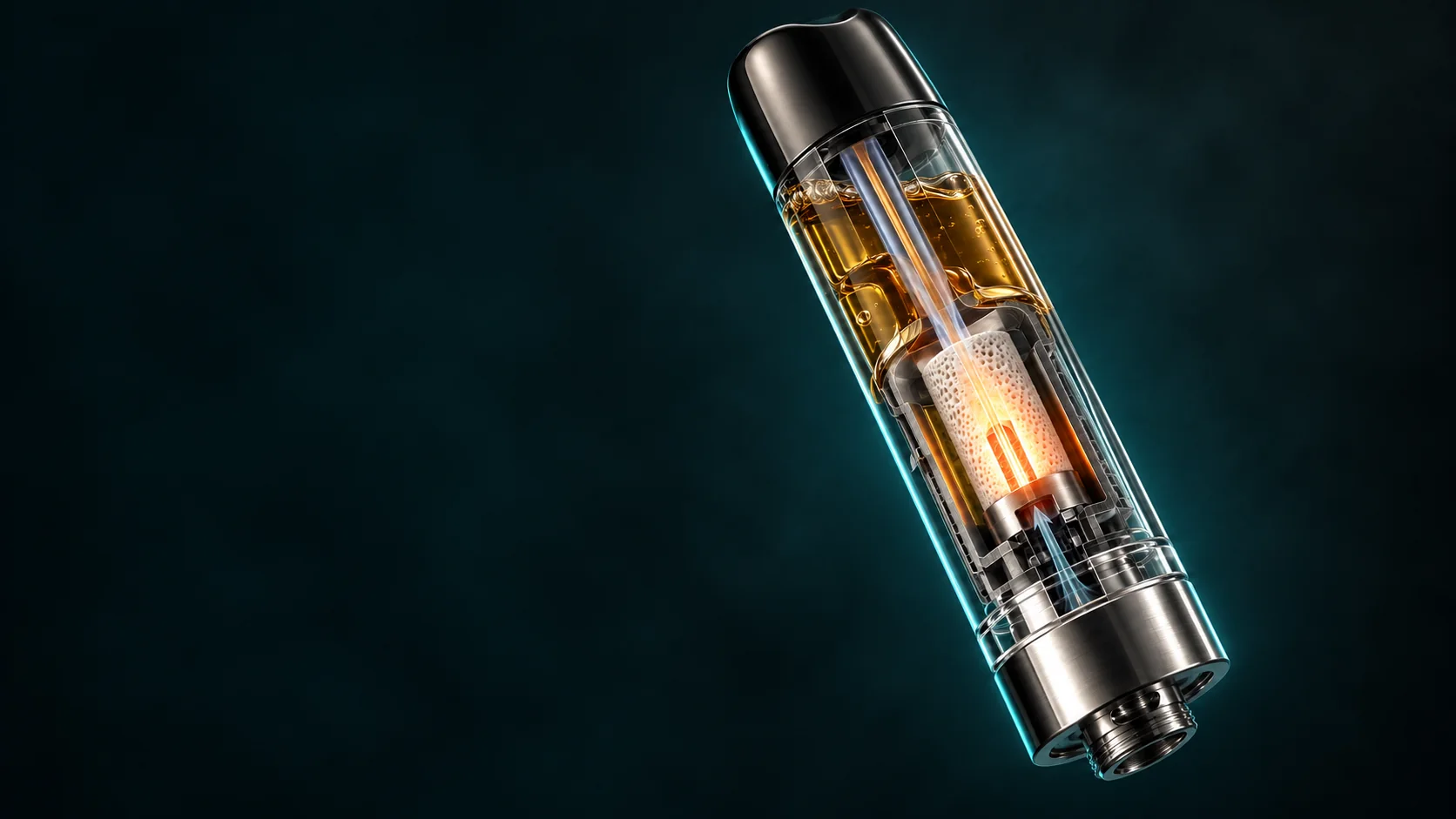
- Media ALT: Transparent cannabis vape hardware showing reservoir, ceramic heating zone, and internal control components. - Media caption: Ceramic core cartridge selection should be reviewed with oil behavior, inlet design, airflow, resistance, and sample validation as one hardware system. - Article type: B2B hardware evaluation - Oil type: Distillate, live resin, live rosin, thick cannabis oil - Technology type: Ceramic core vape cartridge, porous ceramic heating, oil inlet geometry, 510 vape cartridge hardware
Source Keyword Rows
- Primary keyword: ceramic core vape cartridge - Secondary keywords: ceramic heating vape hardware; porous ceramic vape heating; oil compatibility vape hardware; 510 vape cartridge hardware - Priority: P1 - Search intent: technical_evaluation - Buyer stage: evaluation - Topic cluster: oil compatibility and ceramic heating - Target URL context: /engineering/ceramic-heating and /platform/510-vape-cartridges - Data source: serp_observed and local ClearVape keyword library - Metrics confidence: source_observed_metrics_unknown - Metrics: unknown - Selection rationale: P1 ceramic core keyword with strong fit to the engineering page, 510 cartridge platform, buyer sample-review workflow, and GEO answer-block structure.