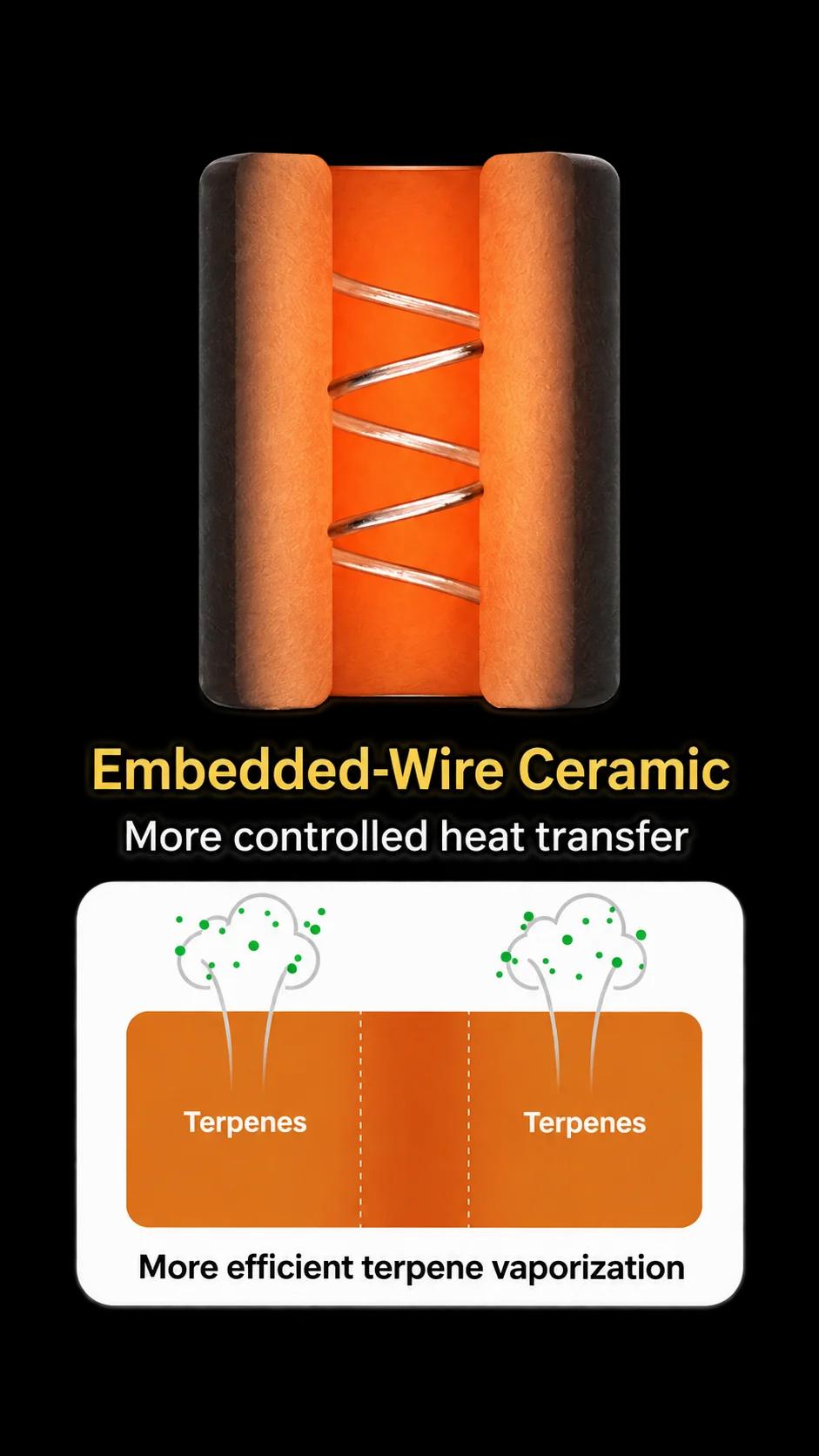
Wicking
The ceramic structure influences how oil is transported toward the heating zone through capillary action.

Cannabis Hardware Engineering
Ceramic structure, inlet geometry, airflow and power output are engineered around CBD oil, distillate, live resin and live rosin behavior.
System Behavior
The behavior of ceramic inside a vape system influences how oil reaches the heating zone, how heat is distributed and how consistently vaporization occurs.
The ceramic structure influences how oil is transported toward the heating zone through capillary action.
Material, geometry and heating architecture affect how energy is distributed across the vaporization surface.
Stable oil delivery and controlled heating help reduce localized overheating that can affect flavor consistency.
Oil viscosity, pore structure, airflow and hardware geometry must work together to maintain balanced oil delivery.
Material Science
Different ceramic materials serve different mechanical, thermal and fluid-management functions. Material selection should be based on the application rather than treated as a single universal solution.
Oil transport + heating structures
In porous alumina systems, performance depends not only on the alumina material itself but also on open porosity, pore distribution, connectivity and ceramic geometry.
Structural + insulating functions
Dense alumina is more suitable where mechanical stability, electrical insulation and dimensional control are more important than oil absorption.
High-toughness structural ceramic
Zirconia is used differently from porous alumina. Its value lies primarily in mechanical strength, toughness and precision structural performance rather than capillary oil transport.
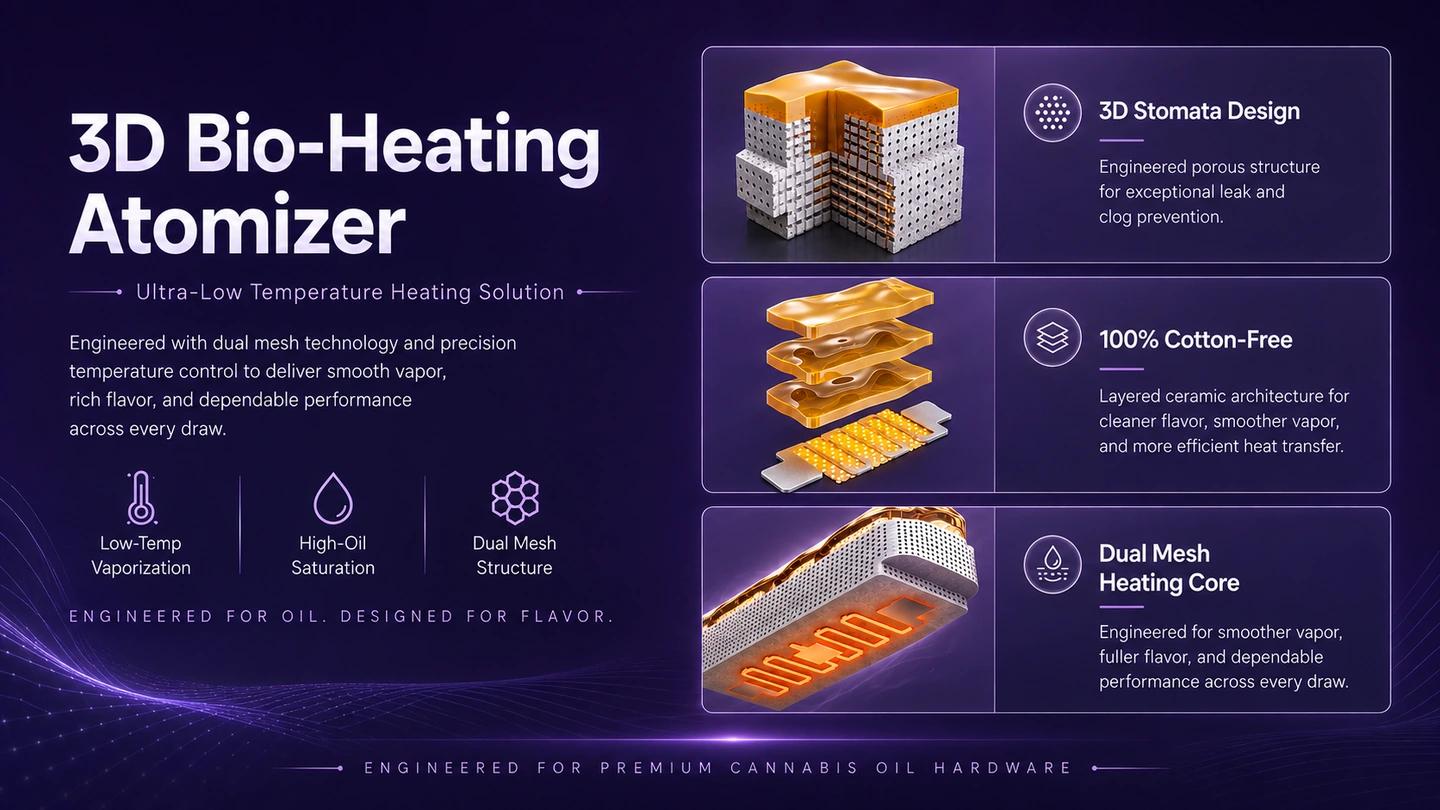
Thicker cannabis oils need a path into the ceramic core without flooding the chamber. The inlet is reviewed with viscosity, fill method and storage orientation in mind.
A porous ceramic core works by retaining oil inside a connected pore network, keeping the heating zone supplied during the draw instead of relying on a loose wick.
The heater geometry, resistance and voltage profile need to work with the ceramic body, so oil is warmed through the core rather than exposed to a bare hot wire.
Airflow, center-post geometry and condensation behavior influence draw response, clogging risk and the way the cartridge feels after repeated pulls.
Microstructure
Oil absorption is not defined by ceramic material alone. In porous ceramic systems, oil transport is influenced by open porosity, pore size distribution, pore connectivity, surface behavior and the physical properties of the oil.
A ceramic structure that transports oil too slowly may not replenish the heating zone efficiently. A structure that transports oil too aggressively can create different fluid-management challenges. Ceramic development therefore requires balance rather than simply maximizing absorption.
Thermal Control
A ceramic structure can transport oil effectively but still perform poorly if heating geometry, resistance, voltage or power density are not correctly matched.
Manufacturing
From material choice to heat matching, each step controls how ceramic behaves inside real cannabis oil hardware.
Select alumina or zirconia for the target thermal, structural and oil-transport role.
Build internal tooling for geometry control and faster iteration.
Shape the ceramic body around the required oil path and heater position.
Lock in density, pore behavior and mechanical stability through thermal processing.
Refine critical dimensions and surfaces before hardware assembly.
Match ceramic geometry with resistance, voltage and heating profile.
Check fit, wicking, heating response, leakage and clogging behavior.
Application Development
Different customers bring different extract viscosity, terpene composition, fill volume, voltage, airflow architecture, device geometry, draw behavior and storage conditions.
diameter, height, wall thickness, heating area, oil-contact area
porosity characteristics, pore distribution, oil transport behavior, surface characteristics
resistance, working voltage, power range, heating profile
air path, oil reservoir, inlet geometry, coil position, battery behavior
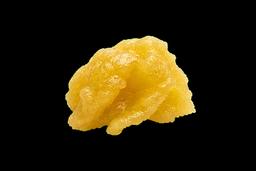
distillate, live resin, live rosin and other high-viscosity extracts
System-Level Engineering
Leakage, clogging, flavor and vapor production are system-level outcomes. Ceramic is a critical part of that system, but reliable hardware requires fluid, thermal, electrical and mechanical design to work together.
Direct Answers
Porous ceramic is a ceramic structure containing interconnected pores that allow oil to move through the material by capillary action. In vape hardware, the ceramic can function as both an oil-transport medium and part of the heating system, depending on the architecture.
Porosity influences how quickly oil reaches the heating zone and how much oil is retained inside the ceramic structure. Effective design requires balancing oil transport with heating behavior, leakage control and the physical properties of the extract.
Alumina and zirconia serve different engineering purposes. Porous alumina is commonly suited to oil-transport and heating structures, while zirconia is valued for mechanical toughness, wear resistance and precision structural applications.
There is no universal ceramic specification for live rosin. The appropriate ceramic depends on oil viscosity, terpene content, operating temperature, heating geometry, airflow and pore structure. For high-viscosity extracts, ceramic and heating architecture should be developed as a combined system.
No. Higher porosity does not automatically mean better performance. Ceramic design must balance oil transport, oil retention, structural integrity, thermal response and leakage behavior.
In-house manufacturing provides greater control over material selection, tooling, geometry, forming and process consistency. It also allows ceramic iterations to be developed alongside the intended oil and device architecture.
OEM / ODM Ceramic Development
Tell us the oil type, viscosity range, capacity, target voltage and hardware format. Our team can evaluate ceramic structure, heating architecture and device integration as one system.
For OEM / ODM development, oil-specific hardware evaluation and ceramic engineering projects.